Technology

Better combustion, by design

A patented burner, a chimney stove layout matched to Nepali cooking, and standard moulds that keep every stove true to the tested design.
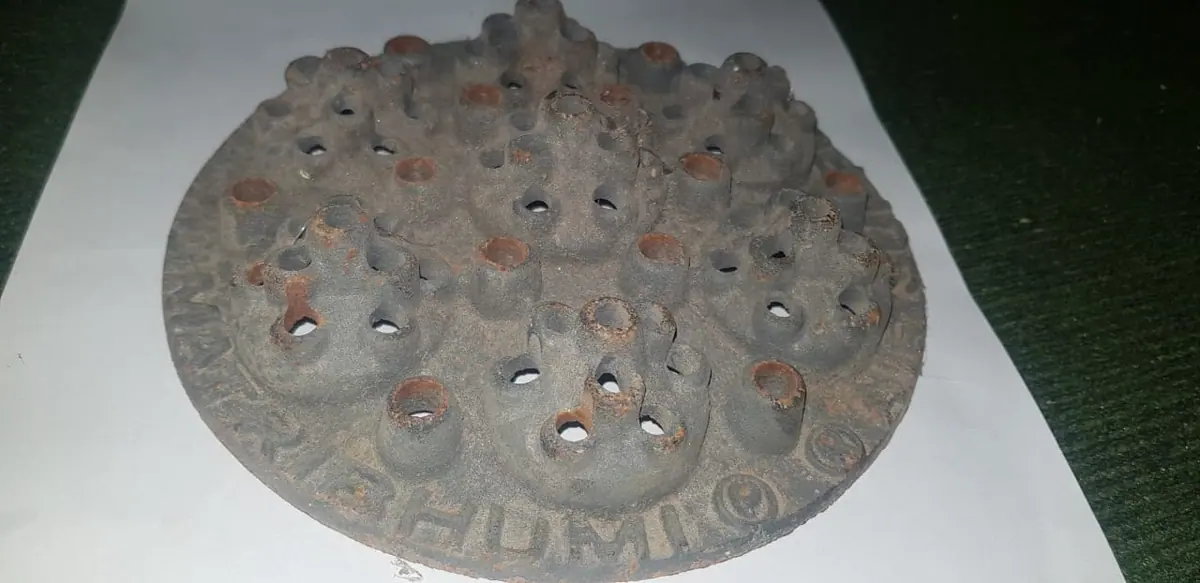
Close-up of the cast Air Supply Disc Burner with raised air nozzles

Combustion & burner

The Air Supply Disc Burner

The burner is a cast metal disc with carefully arranged holes and raised nozzles. It delivers air into the burning fuel bed, improving combustion and concentrating heat on the pot. The disc is embossed with the Matribhumi name and registration mark, and comes in sizes from household to institutional stoves.

The invention is registered as a patent with the Department of Industry (“An Air Supply Disc for Improvise Mud Stove”). The NAST award citation describes it as a technology that reduces firewood consumption by up to 60%.
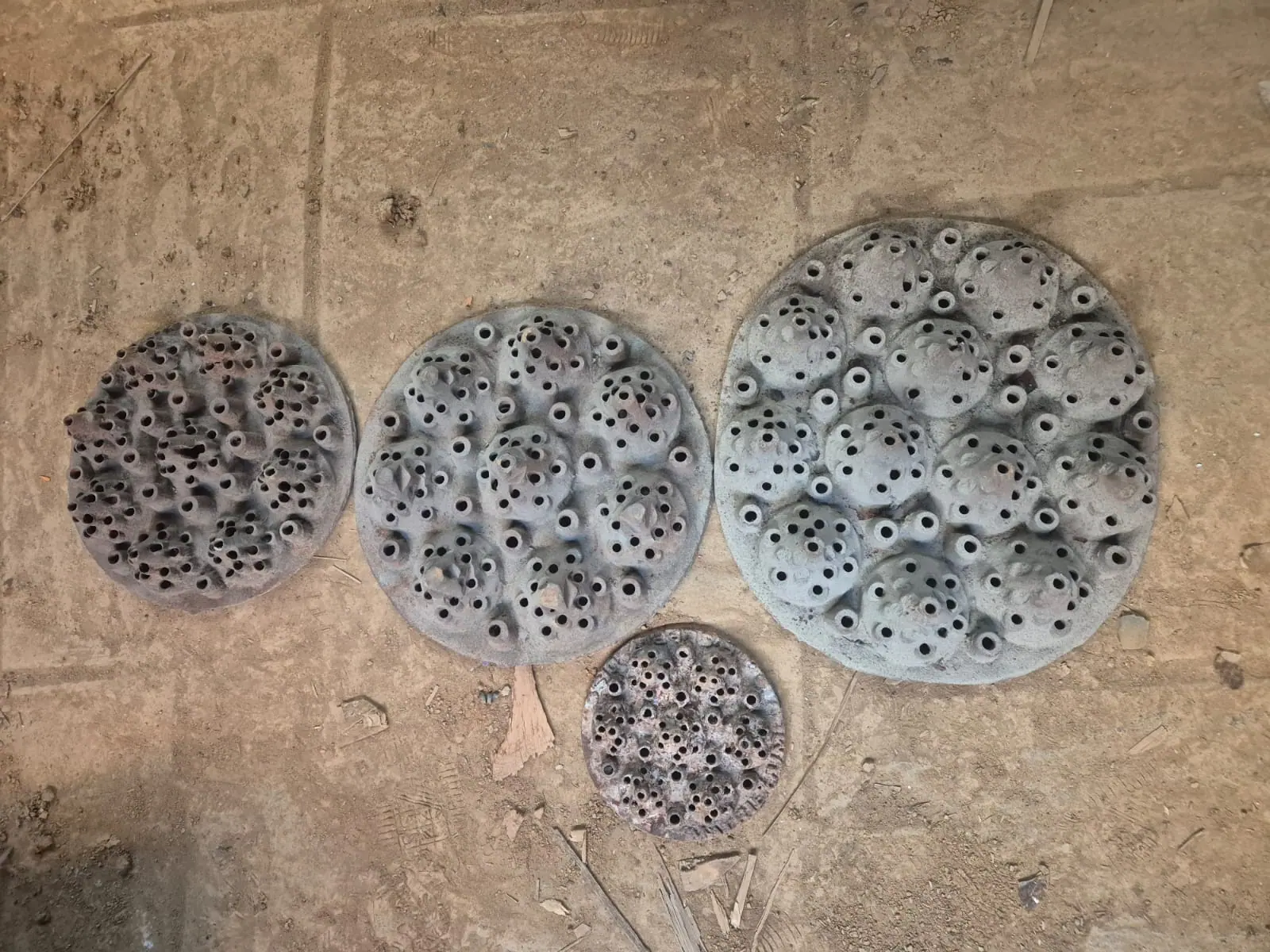
Air Supply Disc Burners in four sizes for household to institutional stoves
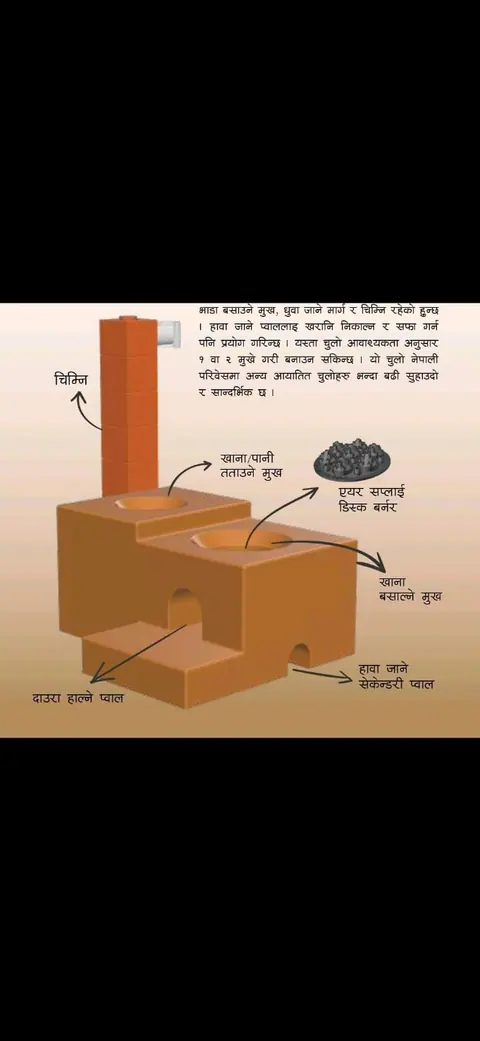
Labelled diagram of the Matribhumi household cookstove: chimney, pot holes, fuel inlet, secondary air inlet and Air Supply Disc Burner

Design

Anatomy of the household stove

Main pot hole
Directly above the Air Supply Disc Burner.
Second pot hole
Uses remaining heat for cooking or warming water.
Fuel inlet
Sized for firewood feeding.
Secondary air inlet
Adds combustion air; also used to remove ash.
Flue & chimney
Carries smoke outside — 7 blocks / 46 inches high.

The outer body is mud, with an iron internal structure — it is not a mud-only stove.

Manufacturing approach

Consistent quality in every village

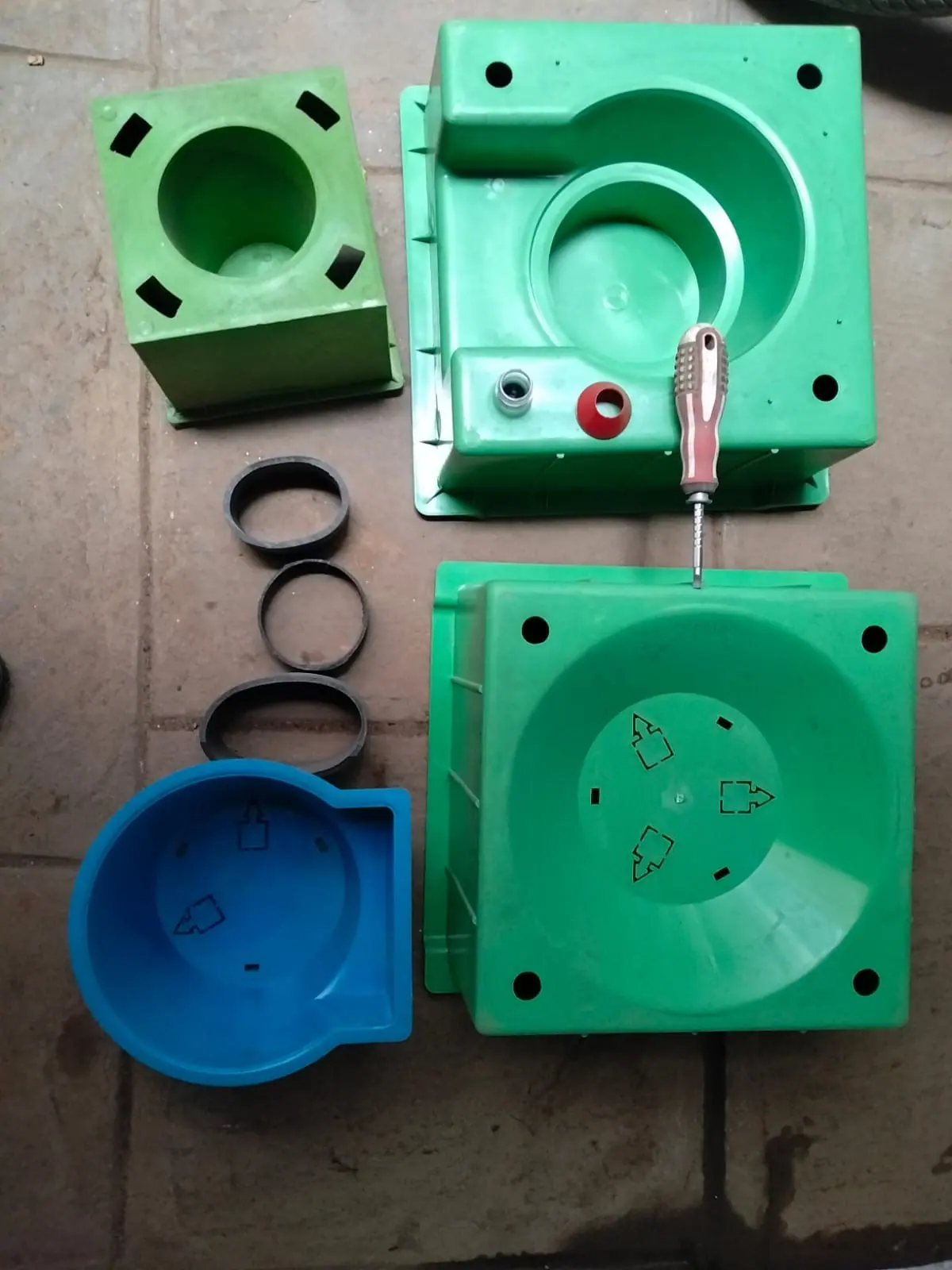
Reusable standard moulds used by technicians to build identical stoves

1 · Standard moulds

Reusable moulds form the combustion chamber, pot seats, air and flue paths to the same dimensions every time.
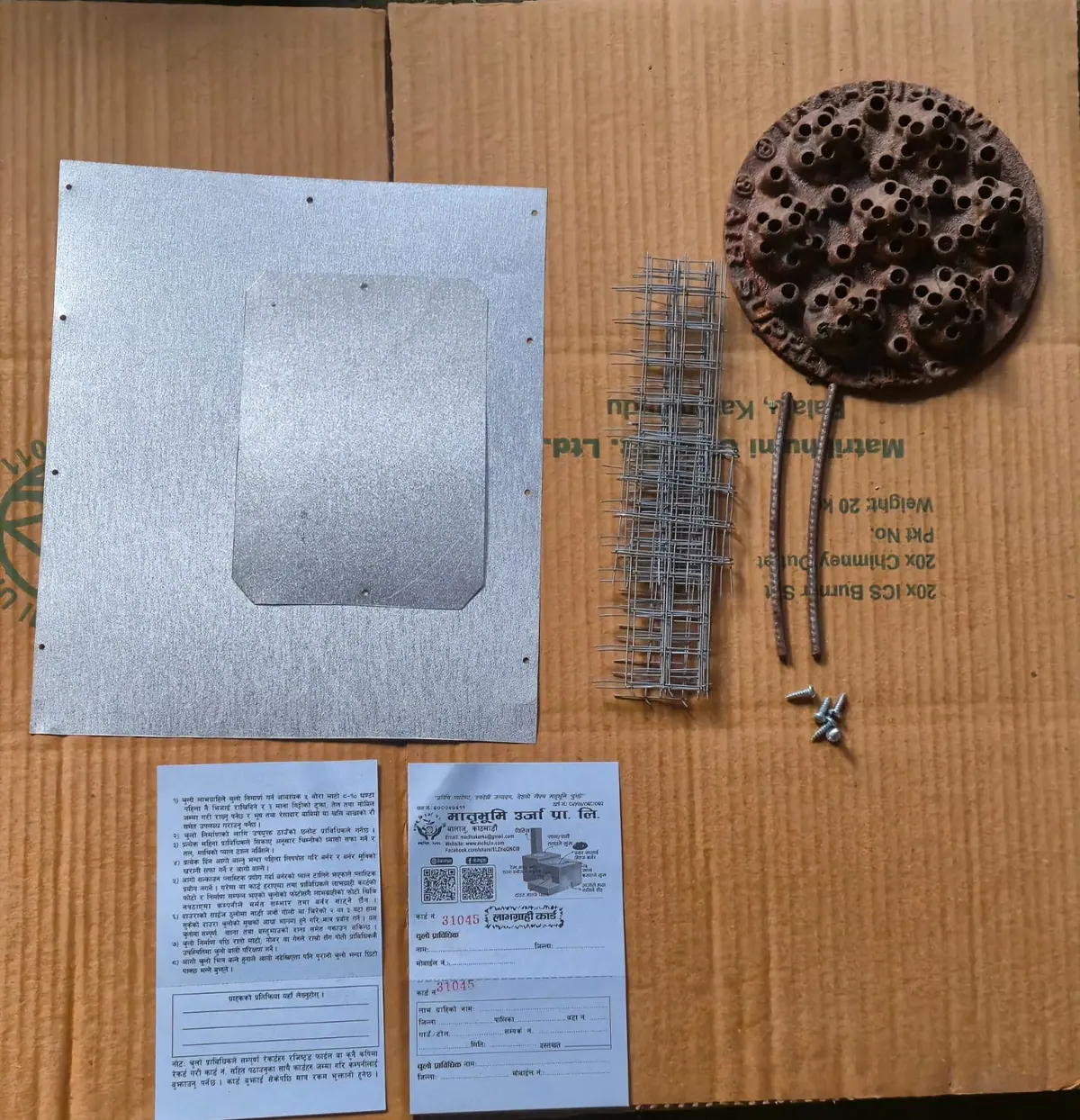
Per-stove material kit: GI sheet, mesh, burner, rods, screws, instruction sheet and numbered beneficiary card

2 · Numbered kit

Each stove gets a material kit and a numbered beneficiary card that records the household and technician.
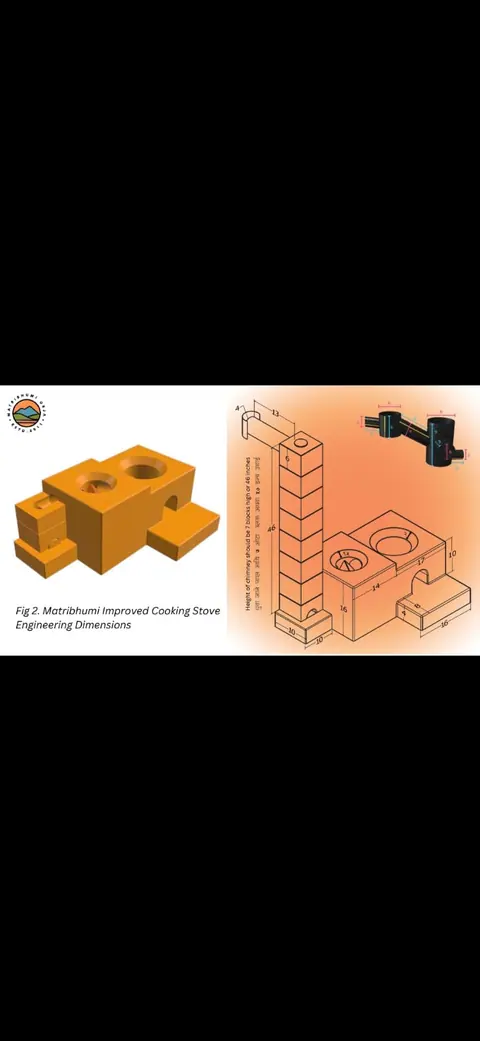
Engineering dimensions of the Matribhumi improved cookstove in inches

3 · Engineering drawings

Dimensioned drawings fix the geometry of body, pot holes and chimney.

Performance & emissions

Laboratory results (RETS, 2024)

Model MICS-HH-06, Product Introduction Test to NIBC 2016. All indicators compliant.

High-power thermal efficiency (min. 20%)
27.34%
High-power thermal efficiency (min. 20%)
Laboratory-tested (RETS)
High-power CO, g/MJd (max. 8)
0.25
High-power CO, g/MJd (max. 8)
Laboratory-tested (RETS)
Indoor PM2.5 emission rate, mg/min (max. 5)
3.77
Indoor PM2.5 emission rate, mg/min (max. 5)
Laboratory-tested (RETS)
Safety score (min. 88)
89
Safety score (min. 88)
Laboratory-tested (RETS)

Technical advantages

Why it works in Nepal

  • Designed for Nepali dishes and pot sizes
  • Built from local mud around a durable iron and burner core
  • Chimney removes smoke from the living space
  • Repairable by trained village technicians
  • Scales from single-pot homes to industrial process heat

Research & development

What we are working on

  • Digital stove-use monitoring (ESP32 sensor device, technician app, dashboard)
  • Laboratory testing of iron, institutional and commercial models
  • Field measurement of fuel savings and continued use