
Clean cooking & climate
Burning less wood in an efficient stove lowers fuel demand and associated emissions, while chimneys improve indoor air.
Carbon & climate
Our carbon programmes focus mainly on the household mud (clay) improved cookstove with chimney, the stove used in most rural Nepali homes. Iron improved stoves for cold high-altitude areas can also be included. We bring the manufacturing, installation network and monitoring that credible carbon programmes need.
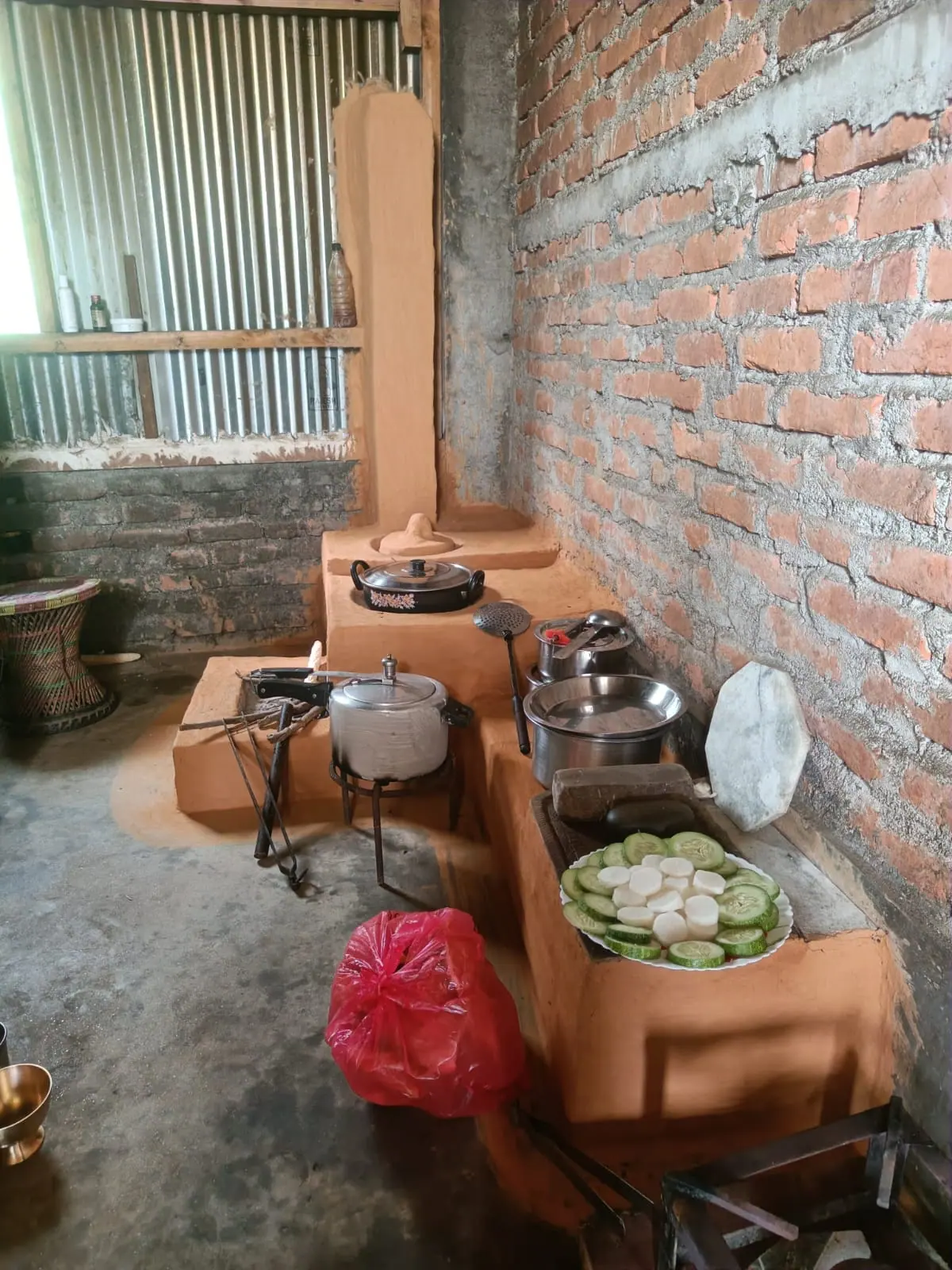
Burning less wood in an efficient stove lowers fuel demand and associated emissions, while chimneys improve indoor air.
Numbered beneficiary cards, GPS-tagged installation records and sensor-based usage data support MRV and audits.
Matribhumi stoves were used in an earlier Gold Standard clean-cooking programme in Nepal implemented by a partner organisation (company-reported; supporting documents are being compiled).
What we offer partners
We are seeking investors and carbon developers who can bring upfront capital and carbon-market expertise to a new chimney-stove programme in Nepal.
Investment case
Household models tested by RETS (Tribhuvan University): MICS-5.6 at 27.14% and MICS-5.5 at 26.25% thermal efficiency. Test reports are shown on the certifications page.
47,000+ stoves installed over 23+ years, including a 3,000-stove supply contract (2021) for a Gold Standard-registered clean-cooking project in Nepal.
Carbon revenue depends on stoves staying in use. We provide full after-sales service for 5 to 7 years through local trained technicians, and a stove once installed runs reliably for 10+ years.
Our own sensor-based usage monitoring, GPS-tagged installation records and numbered kits reduce verification cost and risk.
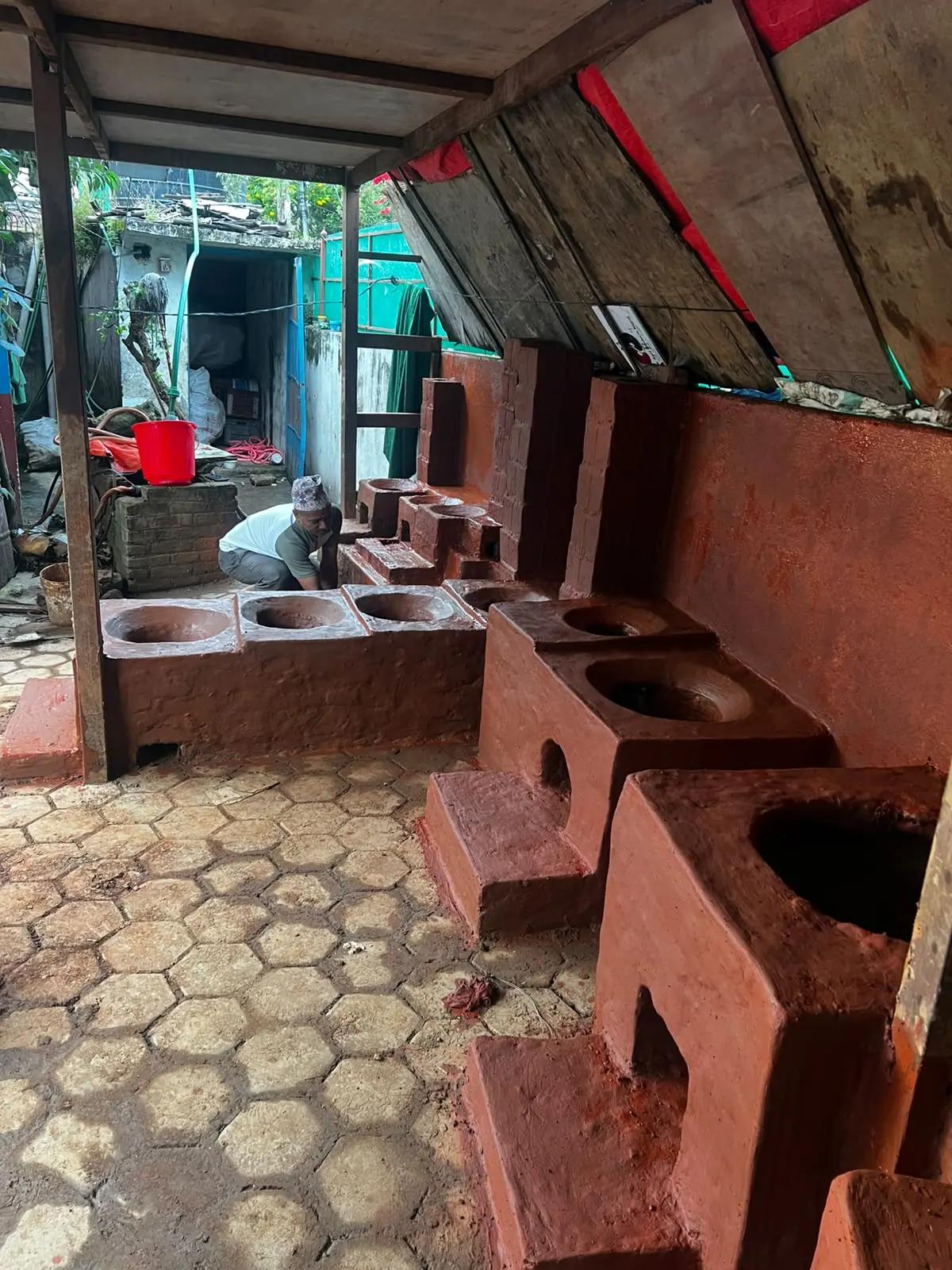
Burners made in Nepal; stoves built on site from local materials by trained village masons. Villages are served in clusters of 20+ homes within 2 km to keep delivery cost low.
We have trained more than 3,000 people to build Matribhumi stoves, and about 1,000 technicians are active across Nepal today, so programmes can start in almost any district.
An investor who wants carbon credits does not need to manage the field work: we build and install the stoves ourselves, keep the records and maintain them for 5 to 7 years.
We propose a pilot phase with full monitoring before scale-up, so investors see real usage data before committing larger capital.
Project development
Target districts, households and baseline fuel use
Led by the carbon partner with an approved standard
Standard moulds, numbered kits, trained technicians
Sensor sample, usage surveys, maintenance visits
Independent third-party audit
Partnership models
Subsidy and clean-cooking programmes
Health, forestry, gender and livelihood projects
Results-based and carbon finance
Let’s discuss a programme structure that works for your fund or portfolio.